
The cellar of the Hussite House is the essence of the “Historical Story of the Gönci Hussites”, surrounded by legends and tales, which have partly survived and partly sunk into the darkness of the past. According to the information provided, there is a huge, multi-storey cellar level under the building, extending below the street below the house. According to the position maintained to this day, the fortified nature and the escape routes were once necessary due to the frequent battles characteristic of the area, fulfilling a kind of protective role. In fact, there are passages in the cellar under the building that run towards the end of the plot and branch off into the neighboring cellars. The currently accessible section of the vaulted, ventilated tunnel is about 8-10 meters. It was closed for safety reasons, given the collapses that occurred in several places on the plot in the 1960s. Since the house has undergone several reconstructions, its current state shows a reconstructed picture. It is a unique creation in its category in our country, and a nationally renowned destination for visitors. According to legend, the interconnected tunnel system leads all the way to Košice. According to some ideas, the end of the tunnel is located in the Kiserdő area near the village of Zsujta, from where Gönc is easily accessible. The underground tunnel system was still in particularly good condition at the beginning of the last century – it proved to be extremely useful during times of war. It was a local custom to play catch in the tunnels among folk children’s games. According to the stories of the elderly, a few decades ago, the Reformed church located in the neighboring street could be accessed underground from the Hussite house, since at that time the church organ could still often be heard playing in the underground tunnel.
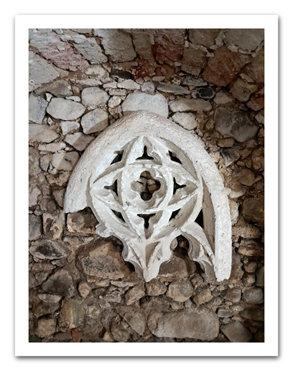
Gothic decorative element of the Pauline Monastery
The central element of the stories surrounding the Hussites is the raid and the spoils of war. Typically for Hussite warriors, the picadors celebrated their military successes at revels. According to legend, on such occasions, the most beautiful girls in the area could reach the leader’s house through the secret underground passage. The history of the tunnel, in connection with the Hussite wars – which locally meant rapid mobilization and close combat – already tells of hiding troops and supplying weapons. In folk legend, the tunnel system retains its protective function even during the period of the wine trade. However, in the 17th and 18th centuries, it was mostly used to store wine and, in its straw-lined rooms, to store military food. In the imagination of children playing with their hands – which is a rumor that can mostly be traced back to fantasy – the goods obtained on the nearby wine route changed hands through the tunnel system. The stories of the past strengthen the mysticism of the building, its mysterious atmosphere befitting a fairy tale.
The vaulted cellar displays the deservedly famous Gönci Barrel, as well as a beautiful Gothic window fragment from the nearby Paul’s Monastery – a rose window, which was once located above the main entrance to the monastery.
Views: 4